
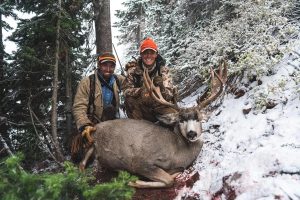
While elk may be a type of deer, elk hunting and deer hunting are not the same game. When Wyoming hunters refer to deer hunting, they’re referring to mule deer, and hunting one or the other requires the use of different tactics and places different physical demands on the hunter. Elk and mule deer each exhibit their own distinctive behaviors both in and out of their mating seasons, and these behaviors suit each of them to their own environments and present their own unique challenges to hunters who want to bring home game.
You need your hunting strategy to evolve likewise to meet these challenges. While some things remain the same from one hunt to the next, like the importance of making sure you have all the right equipment and supplies with you, you’ll need to rethink your approach if the game changes.
The Size and Weight of Your Game
It goes without saying that elk are bigger than mule deer. Even a cursory glance at both animals suggests you’ll need to make your approach evolve when you switch from one hunt to the other. In Wyoming, elk can weigh anywhere from hundreds to upwards of 1000 pounds, depending on whether you’re hunting bull elk or cow elk. Elk are also taller than mule deer. These qualities make them hardy animals, and it means they’re better suited to travel over long distances. If your hunt is successful, you’ll be carrying a much heavier load. Naturally, all this means a greater physical burden on any hunter seeking them out.
Mule deer typically weigh a few hundred pounds and stand at an average of 3.5 feet tall at the shoulder. Due to their lighter weight and shorter stature, packing them out is easier than packing out a bull elk, though it’s by no means a leisure activity. Fair chase hunting in Wyoming is as challenging as it sounds, which is why it’s worth the effort.
Different Behavior Necessitates Different Tactics
Depending on the time of year when you go out on the hunt, there are tools available for hunters looking for bull elk. During rut, bull elk are highly vocal animals, and hunters can take advantage of this with calls, decoys, and other techniques which can draw them out. As the season changes, the behavior and terrain change with it, and the tactics a successful hunt requires must change accordingly.
Mule deer rut takes place slightly later than elk rut, lasting into December while bull elk are largely finished and become solitary by November. Hunters seeking game need to be aware of the difference in their peak mating seasons. Mule deer also aren’t quite as vocal as elk, although deer calls remain a valuable tool for hunters who hope to lure them.
Be Mindful of the Terrain
While elk and mule deer share mountainous habitats, their physical qualities allow them to navigate their ranges differently. As larger and sturdier animals, elk can cover great distances. That means hunting them requires a more aggressive approach and takes a greater physical toll on the hunter.
Mule deer often prefer higher elevations than elk, so hunting them may require a bit more of an uphill climb. Because they’re smaller and lighter than elk, they’re also more skittish and therefore more likely to turn and flee. Hunting them requires more patience and stealth, as well as a quieter approach.
Crooked Sky Outfitters provides guided mule deer and elk hunts in Cokeville, Wyoming and can also provide taxidermy referrals when they hunt is done. Contact us at (307) 220-7686 to book your trip.
Leave a Reply
You must be logged in to post a comment.